
Headline: "The CX Arms Race: Why Customer Support Tech Is Revolutionizing (and Wrecking) Your Business"
---

Customer experience (CX) used to be a handshake and a smile—simple, personal, and human. Today, it’s a battleground of dashboards, APIs, and algorithms. The stakes? Loyalty, revenue, and survival in a market where the only constant is that customers demand more. Companies are pouring billions into CX technology to keep up, chasing the elusive promise of frictionless service and personalized care. But here’s the catch: while these tools are brilliant in theory, the execution often leaves both customers and businesses spinning in circles.
Let’s cut through the hype. From call recording dashboards that mine your conversations for insights to messaging integrations that promise seamless communication, CX tech is reshaping how businesses interact with their customers. The question is: who’s actually winning?
---
The Promise: Why CX Tech Is Worth the Investment
Let’s start with the good stuff. Done right, CX technology can almost feel magical. Take call recording dashboards, for example. These aren’t just glorified tape recorders. They’re treasure chests of data, offering teams a way to dissect customer interactions and learn what works—and what doesn’t. For a sales team, this means identifying patterns in client objections and fine-tuning their pitch. For customer support, it’s about training agents with real-world examples of what a great (or terrible) interaction sounds like.
But the real value lies in how these tools elevate the customer’s experience. Imagine calling a company for the third time about the same issue. Instead of starting from scratch, the agent pulls up a detailed log of your previous conversations, complete with flagged pain points and unresolved concerns. No more, “Can you explain the issue again?” That’s the kind of efficiency that turns frustrated customers into loyal ones.
Then there’s communication and messaging integration. By threading together email, SMS, and instant messaging, businesses can maintain a single, unified conversation with their customers, no matter the platform. Forget the days of sifting through your inbox for a confirmation email or waiting on hold for an update. With automated alerts and real-time status updates, customers stay informed without lifting a finger.
The results speak for themselves. Companies that prioritize CX see revenue growth rates 4-8% above their market average. And let’s not forget the intangible benefits: happier customers, stronger brand loyalty, and fewer angry tweets dragging your company name through the mud.
---
The Reality: Why the Wheels Sometimes Fall Off
But for every success story, there’s a cautionary tale. CX technology isn’t a silver bullet, and when it fails, it fails hard. The problem often boils down to implementation—or rather, the lack of it. Businesses rush to adopt the latest tools without fully understanding how they fit into their existing workflows. The result? A Frankenstein-like patchwork of disconnected systems that frustrate employees and confuse customers.
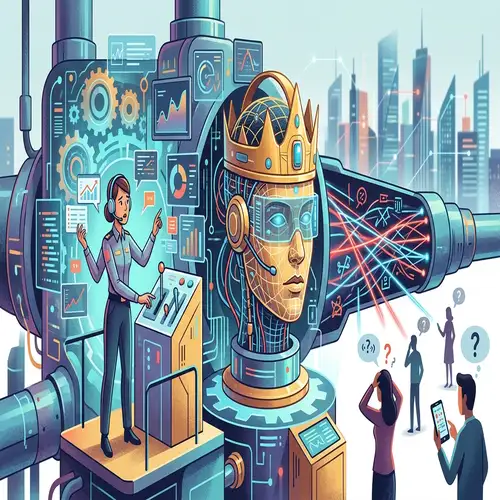
Take the call recording dashboard. Sure, it’s packed with features, but without proper training, most agents barely scratch the surface of its capabilities. Instead of improving service, it becomes just another screen to click through, adding complexity without delivering value. Meanwhile, customers are left wondering why their issues still aren’t being resolved faster.
And then there’s the cost. Let’s not pretend these tools are cheap. Between licensing fees, integration costs, and ongoing maintenance, the price tag can climb into six or even seven figures. For smaller businesses, the ROI isn’t always clear. Are you really getting your money’s worth, or are you just keeping up with the Joneses?
Even worse, there’s the risk of alienating your customer base. Automation is a double-edged sword. While it can streamline processes, it also risks stripping away the human touch. Nothing says “we don’t care” quite like a canned, robotic response to a heartfelt complaint. The irony? In the race to improve CX, some companies end up making it worse.
---
Playing Devil’s Advocate: Are We Overengineering the Customer Experience?
Here’s a contrarian thought: maybe we’re overthinking this whole CX thing. Do customers really want chatbots that can pass the Turing test or dashboards that analyze their every word? Or would they just prefer to speak to a competent human who can solve their problem on the first try?
There’s a case to be made that the obsession with tech-enabled CX is a distraction from the basics. A fancy API won’t fix poor customer service culture or a lack of employee empowerment. And let’s face it—some of the best customer experiences come from companies that keep it simple. Think of the local shop owner who remembers your name and your favorite order. No dashboard required.
The other danger is that businesses become so focused on metrics—average handle time, customer satisfaction scores, net promoter scores—that they forget the actual humans behind the numbers. CX technology should be a means to an end, not the end itself. When the tools become the star of the show, the customer inevitably gets lost in the shuffle.
---
Bridging the Gap: Making Technology Work for Everyone
So how do we reconcile the promise of CX technology with its pitfalls? The answer lies in balance. Businesses need to approach these tools not as a magic wand but as a set of instruments that require skill and practice to play well.
Start with a clear strategy. Before investing in any new technology, ask yourself: What problem are we trying to solve? If you can’t answer that question, put the credit card away. Next, focus on integration. The best CX tools are the ones that work seamlessly with your existing systems, not against them. And don’t skimp on training. A poorly trained team will never fully realize the potential of even the most sophisticated tools.
Finally, don’t forget the human element. Technology should enhance human interactions, not replace them. Use it to free up your team from repetitive tasks so they can focus on what they do best: building relationships and delivering exceptional service.
---
What’s Next: The Future of CX Technology
Looking ahead, it’s clear that the CX technology arms race is far from over. AI will continue to play a bigger role, not just in automating tasks but in offering predictive insights that anticipate customer needs before they even arise. The next frontier? Hyper-personalization at scale. Imagine a world where every customer interaction feels tailor-made, from the products you’re recommended to the tone of the emails you receive.
But with great power comes great responsibility. As CX tools become more advanced, the ethical questions will only grow louder. How much data is too much? At what point does personalization cross the line into invasion of privacy? Companies will need to navigate these waters carefully, balancing innovation with integrity.
In the end, the winners in the CX game won’t be the ones with the flashiest dashboards or the most chatbots. They’ll be the ones who remember the fundamental truth of customer experience: it’s not about the tech. It’s about the people.
So ask yourself: is your CX strategy designed to dazzle—or to deliver? Because in a world where customer loyalty is harder to earn than ever, the answer could make or break your business.