The Help Desk Mirage: Why Customer Support Technology Still Fails to Deliver on Its Lofty Promises
Here’s a bold claim: the help desk software industry is drowning in its own hype. For years, we've been sold a utopia where every customer issue is resolved effortlessly, every employee ticket is tracked and fixed before it becomes a problem, and the technology quietly hums along in the background, making us all look like geniuses. And yet, here we are in 2026, still grappling with the same old headaches: clunky interfaces, half-baked chatbots, and platforms that promise the moon but deliver a black hole of frustration.
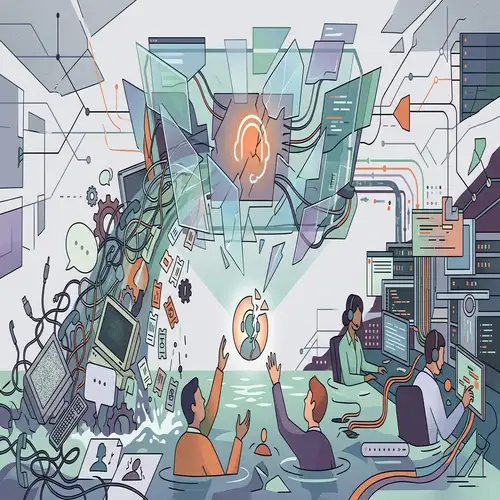
It’s not that progress hasn’t been made. The likes of Zendesk, SolarWinds, and RingCentral have carved out significant market share with platforms that are undeniably more sophisticated than the patchwork of spreadsheets and email threads many businesses relied on a decade ago. But for all that sophistication, there’s a growing undercurrent of dissatisfaction in the CX space. The promise of help desk nirvana—seamless omnichannel support, lightning-fast resolution times, and AI that actually feels intelligent—remains elusive for most companies. Why? Because the gap between what these platforms claim to do and what they actually achieve is wider than most vendors are willing to admit.
The Real Costs of "Cutting-Edge" Help Desk Software
Let’s talk about money. Help desk software has become a billion-dollar industry, and vendors are raking in profits by convincing companies that their platforms are essential for survival. And maybe they are—if you can afford to implement them properly. But here’s the dirty little secret: most businesses can’t.
Sure, the subscription fees might look manageable on paper—$50 per agent per month, or something equally digestible. But that’s just the tip of the iceberg. Factor in the cost of onboarding, training, customization, and ongoing maintenance, and suddenly, you’re staring down a six-figure investment before you’ve even resolved your first support ticket.
And let’s not forget the hidden costs of failure. A poorly implemented help desk system doesn’t just fail to deliver ROI; it actively sabotages your support operations. Tickets get lost in the abyss, agents spend more time wrestling with the software than helping customers, and your Net Promoter Score plummets faster than you can say "vendor lock-in."
Automation: Savior or Saboteur?
Of course, no discussion about help desk software in 2026 would be complete without addressing the elephant in the room: automation. AI-driven chatbots and self-service portals have been hailed as the future of customer support, promising to reduce costs while improving resolution times. And to some extent, they’ve delivered.
But let’s not kid ourselves: automation is not a panacea. For every success story about a chatbot that deflected 80% of inbound queries, there’s a horror story about one that frustrated customers to the point of rage-quitting. The reality is that automation works best for simple, repetitive tasks—resetting passwords, checking order statuses, and so on. Once you venture into more complex territory, the limitations become glaringly obvious.
Customers don’t want to argue with a bot when their issue requires nuance and empathy. They want a human who can listen, understand, and solve their problem without resorting to scripted platitudes. And yet, as companies chase cost savings, the human touch is increasingly being sidelined in favor of algorithms and canned responses.
The Vendor Lock-In Trap
Another issue that no one likes to talk about? Vendor lock-in. Once you’ve invested in a help desk platform, switching to a competitor is about as appealing as a root canal without anesthesia. The data migration alone can be a nightmare, not to mention the disruption to your operations and the time it takes to retrain your staff.
Vendors know this, and they exploit it. They’ll lure you in with attractive pricing and flashy features, only to nickel-and-dime you for every add-on and integration you need to make the system functional. By the time you realize you’re in too deep, it’s too late. You’re stuck—and they know it.

Playing Devil’s Advocate: Is the Problem Really the Technology?
Now, let’s flip the script for a moment. Is it possible that the problem isn’t the technology at all, but the way companies are using it? After all, even the best help desk software is only as good as the people and processes behind it.
Too often, businesses treat their help desk platform as a magic bullet, expecting it to solve problems that are fundamentally human in nature. Poor communication, lack of accountability, and inadequate training can’t be fixed with a shiny new dashboard. If your support team doesn’t know how to use the tools at their disposal—or worse, if they don’t care—no amount of automation or analytics is going to save you.
The Winners and Losers in the Help Desk Arms Race
So, who’s actually winning in this landscape? The big players—Zendesk, Freshdesk, SolarWinds—are certainly doing well for themselves, but their dominance comes at a cost. Smaller vendors are struggling to compete, which means less innovation and fewer options for businesses looking to differentiate their support experience.
Meanwhile, customers—the people all this technology is supposed to serve—are often the biggest losers. They’re stuck navigating labyrinthine phone trees, battling unhelpful chatbots, and waiting days (or weeks) for issues to be resolved. And as their frustration grows, so does their willingness to take their business elsewhere.
The Future of Customer Support: Evolution or Revolution?
So, where do we go from here? Will help desk technology continue to evolve incrementally, or are we on the cusp of a revolution?
If I had to bet, I’d say it’s the latter. The current model is unsustainable. Companies can’t keep throwing money at platforms that fail to deliver meaningful improvements, and customers won’t tolerate subpar experiences forever.
The next wave of innovation will likely focus on bridging the gap between automation and human empathy. Imagine a system where AI handles the grunt work—logging tickets, triaging issues, and suggesting solutions—while human agents focus on building relationships and solving complex problems. It’s not a pipe dream; it’s a necessity.
But here’s the catch: getting there will require a fundamental shift in mindset. Companies will need to stop treating their help desk as a cost center and start viewing it as a strategic asset. That means investing not just in technology, but in the people and processes that make it work.
Closing Thoughts: The Mirage is Fading
The help desk industry has spent years selling us a mirage—a shimmering vision of effortless support and unparalleled efficiency. And while we’ve made progress, the reality often falls far short of the dream.
But the mirage is fading, and what’s left is an opportunity. An opportunity to build systems that don’t just work, but work well. Systems that empower agents, delight customers, and deliver real, measurable value.
The question is: will we seize it? Or will we continue chasing shadows, pouring money into platforms that promise everything and deliver nothing? The clock is ticking, and the future of customer support hangs in the balance. Choose wisely.