Odoo: A Comprehensive Overview of Its Community and Enterprise Editions
In the ever-evolving landscape of business management software, Odoo has emerged as a prominent player, offering a modular approach to Enterprise Resource Planning (ERP). Originally launched in 2005 as TinyERP, it has undergone significant evolution, now boasting a suite of applications that cater to a diverse range of business needs. With more than 3 million users globally, Odoo's flexibility and scalability make it an attractive choice for small to medium-sized enterprises (SMEs) and large corporations alike. This article delves into the distinctions between Odoo's Community and Enterprise editions, exploring their features, benefits, and implications for businesses seeking to optimize their operations.

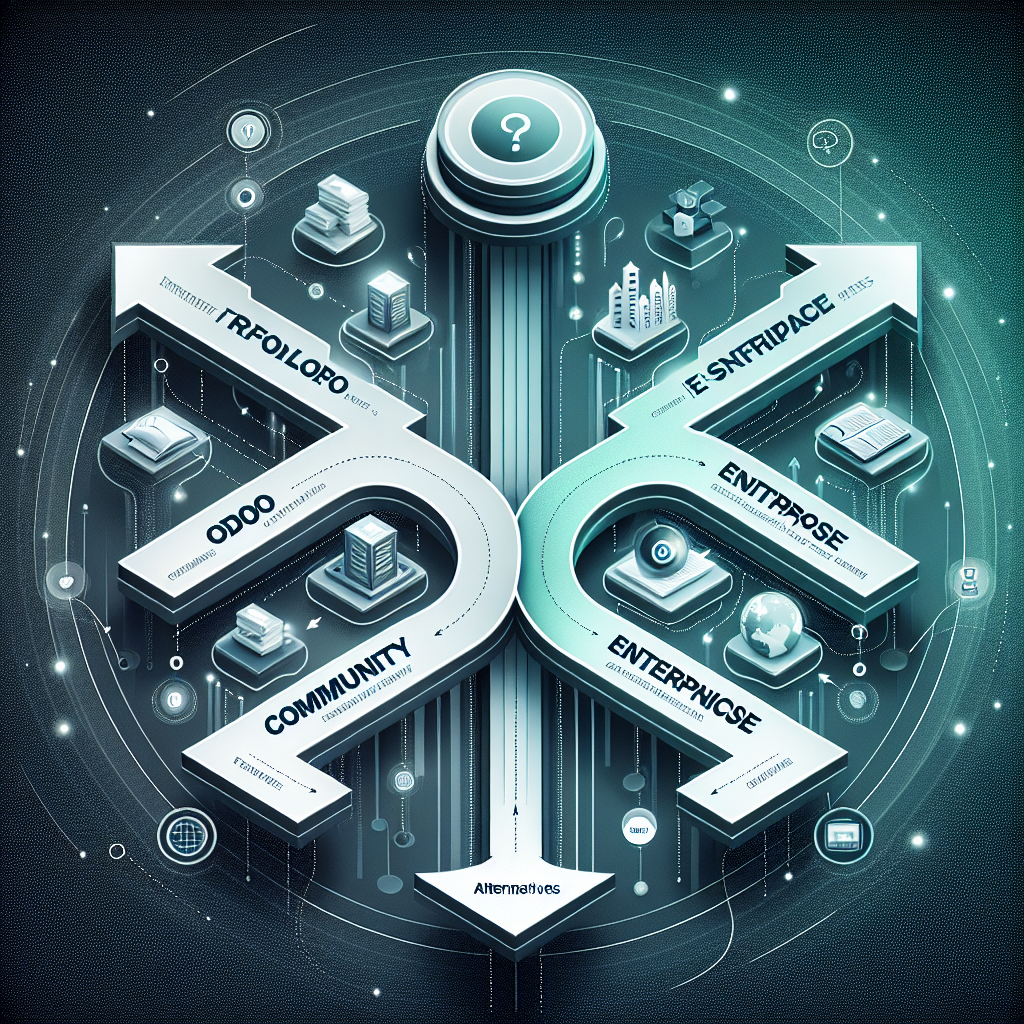
Understanding Odoo: Community vs. Enterprise
Odoo is offered in two primary editions: Community and Enterprise. The Community edition is an open-source platform, available to users free of charge. It provides essential features suitable for small to medium-sized businesses, including modules for sales, inventory, accounting, and customer relationship management (CRM) [Source 1][Source 2]. In contrast, the Enterprise edition is a paid solution, designed for larger organizations that require advanced functionalities, dedicated support, and enhanced customization options [Source 2][Source 4].
Key Features and Functionalities
Both versions of Odoo share numerous functionalities, but they cater to different organizational needs. The Community edition allows users to access a broad array of modules, which can be customized to a degree but lacks some advanced features found in the Enterprise edition. For instance, while both versions include modules for sales and inventory management, the Enterprise edition offers more robust accounting features, a modern user interface, and access to the Odoo Studio, a tool that enables users to create custom applications [Source 1][Source 4].
The Enterprise edition also provides unlimited functional support, including version upgrades and hosting options on either public or private clouds, which enhances its performance and reliability [Source 1][Source 4]. This is particularly beneficial for larger organizations that require consistent updates and a more stable operational environment.
Cost Implications

One of the most distinguishing factors between the Community and Enterprise editions is the pricing structure. The Community edition is free, making it an attractive option for startups and small businesses looking to minimize costs [Source 1][Source 3]. However, as businesses grow and their needs become more complex, they may find the limitations of the Community edition increasingly restrictive. In such cases, transitioning to the Enterprise edition, which starts at approximately $31.10 per user per month [Source 19], may be a worthwhile investment to unlock advanced features and support.
Customization and Flexibility
Odoo's modular architecture allows businesses to implement only the applications they need, providing a tailored approach to ERP solutions. This flexibility is particularly appealing to SMEs that may not require the full suite of functionalities available in the Enterprise edition [Source 4][Source 5]. However, the customization options are significantly more extensive in the Enterprise edition, allowing for deeper integration and a more seamless user experience.
Moreover, businesses that operate in niche markets may benefit from the extensive community support available for the Community edition, which has contributed to over 4,500 available modules developed by users worldwide [Source 31]. This community-driven approach fosters innovation and continuous improvement, albeit with the caveat of potentially limited official support for users of the Community edition [Source 2].
User Experience and Interface
The user interface (UI) is another critical aspect where the two editions diverge. While the Community edition offers a basic UI, the Enterprise edition features a more modern and enhanced interface, designed to improve user engagement and operational efficiency [Source 1][Source 4]. The improved UI in the Enterprise edition streamlines navigation and simplifies the user experience, which is particularly beneficial for larger teams that require quick access to various modules [Source 4][Source 5].
Implementation and Support
For many businesses, the decision to implement an ERP system hinges on the availability of support and training. The Enterprise edition includes dedicated support options, which can significantly ease the transition process for organizations unfamiliar with ERP systems [Source 2][Source 4]. In contrast, users of the Community edition often rely on community forums and user-generated content for troubleshooting and learning, which may not provide the same level of assurance as professional support [Source 1][Source 2].
Integration with Third-Party Applications
Odoo's open-source nature allows for extensive integration capabilities, enabling businesses to connect with various third-party applications seamlessly. This is particularly advantageous for companies that use multiple software solutions across different departments, as it allows for a unified approach to data management and operational efficiency [Source 1][Source 2]. However, the Enterprise edition provides enhanced integration options that can simplify the process further, particularly for complex business environments [Source 4].
Implications for Business Growth
As enterprises grow and evolve, their operational needs change. The decision to adopt Odoo's Community or Enterprise edition can significantly impact a business's ability to scale effectively. For startups and smaller companies, the Community edition offers a cost-effective entry point into the world of ERP without overwhelming users with unnecessary features [Source 1][Source 4]. However, as these businesses expand, many may find that transitioning to the Enterprise edition is essential for maintaining efficiency and competitiveness in a crowded marketplace.
Conclusion: The Right Fit for Your Business
Choosing between Odoo's Community and Enterprise editions ultimately depends on a company's size, budget, and specific operational needs. For small to medium-sized enterprises seeking a flexible and cost-effective solution, the Community edition provides a robust platform with essential features. However, larger organizations or those with more complex requirements may find the Enterprise edition's advanced functionalities, dedicated support, and integration capabilities indispensable for driving growth and enhancing operational efficiency.
As businesses navigate the complexities of modern management, platforms like Odoo offer a comprehensive solution that can adapt to their evolving needs. By understanding the distinctions between the two editions and evaluating their unique requirements, organizations can make informed decisions that align with their strategic goals and operational demands.